
What Is Thermal Runaway in Lithium Batteries?
Strictly speaking, thermal runaway in lithium batteries occurs at two levels.
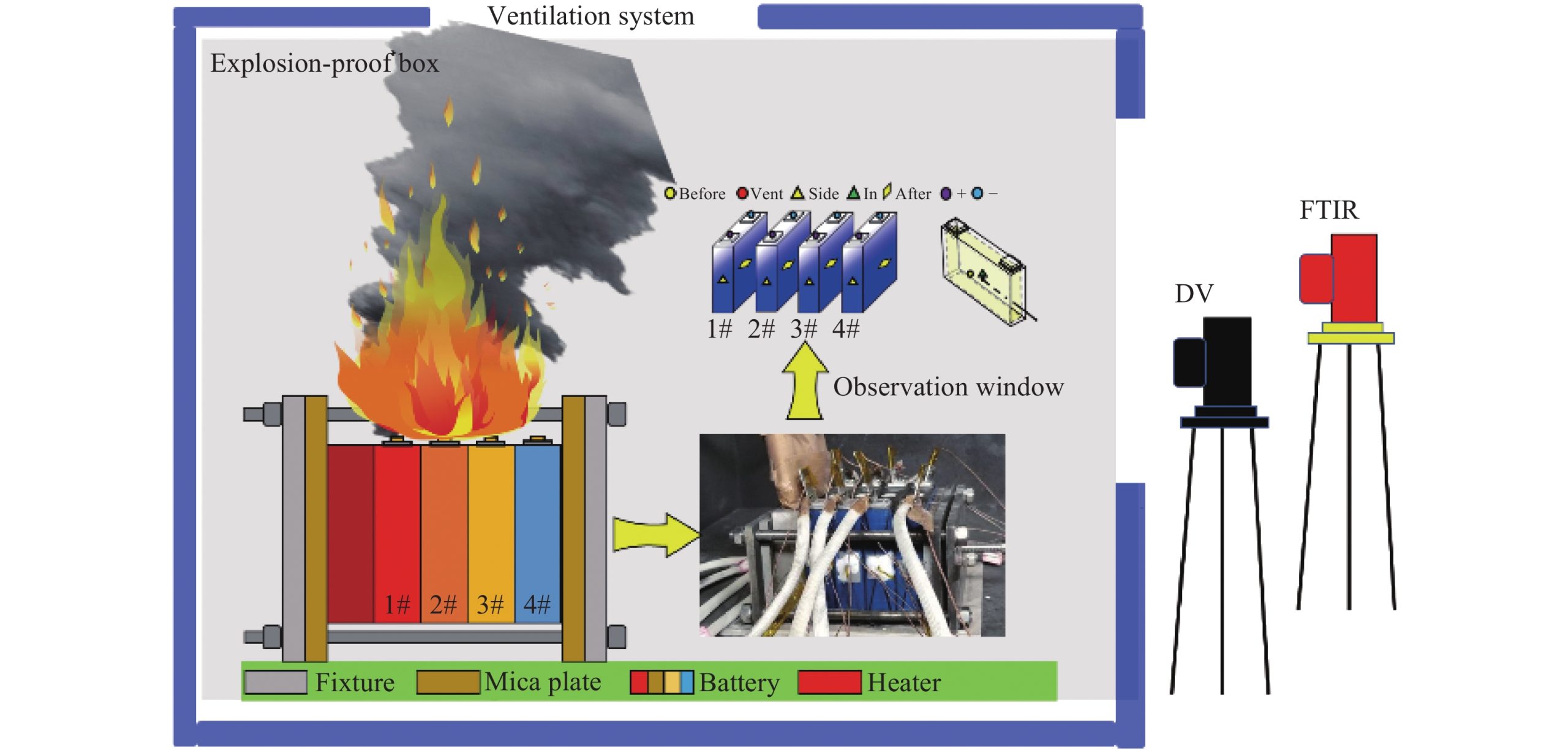
The first is cell-level thermal runaway, which refers to an internal short circuit occurring inside a single lithium-ion cell. The short circuit causes continuous temperature rise inside the cell. For NCM (ternary lithium) cells, when the internal (local) temperature rises above approximately 180 °C, the cathode material will start to decompose and release oxygen. With flammable electrolytes present, oxygen and heat together will lead to rapid combustion, resulting in thermal runaway.
For LFP (lithium iron phosphate) cells, the cathode material only releases oxygen above ~400 °C, so thermal runaway is more difficult to trigger.
The second type is PACK-level thermal
runaway, which means once a single cell goes into thermal runaway, the high
temperature generated by its combustion induces adjacent cells to also enter
thermal runaway. This cascading chain reaction is PACK-level thermal runaway.
Once it reaches this stage, it is extremely difficult to control.
What Is an Internal Short Circuit?
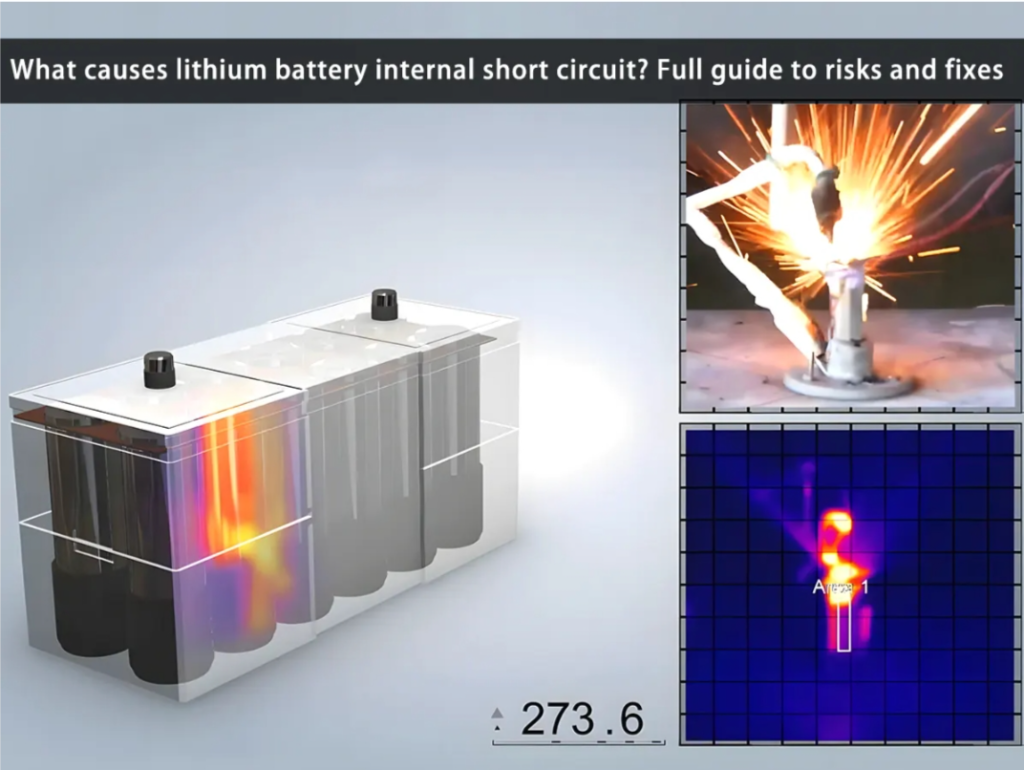
An internal short circuit refers to the positive and negative electrode plates inside a single lithium-ion cell coming into direct contact. There are four types of direct-contact short circuits:
- Cathode active material ↔ anode active material
- Cathode current collector ↔ anode current collector
- Cathode active material ↔ anode current collector
- Anode active material ↔ cathode current collector
The causes of short circuits vary, including lithium dendrites, metal burrs, foreign particles, etc.
Is Internal Short Circuit the Only Cause of Thermal Runaway?
Yes — internal short circuits can be considered the exclusive root cause of thermal runaway.
Some may argue that external short circuits or external high temperature could also cause thermal runaway. In practice, however, external short circuits are easy to prevent at the PACK-design level by adding over-current protection components (e.g., Tesla’s fuse-based design).
External high temperatures generally do not cause thermal runaway unless the external environment reaches several hundred degrees Celsius.
Does an Internal Short Circuit Necessarily Lead to Thermal Runaway?
Not necessarily. Internal short circuits can be categorized into early stage, mid stage, and late stage.
Early stage: Short-circuit current is very small (a few amperes), heating power is low (~10 W).In some cases, early-stage shorts may self-heal, resulting in no thermal runaway.
Mid stage: Short-circuit current increases to 10 A–tens of amperes, heating power rises to tens of watts. At this stage, self-repair is unlikely, and the short only worsens over time. Even a well-designed cooling system may not prevent escalation.
Late stage: Short-circuit current increases sharply, heating power surges rapidly. At this stage, thermal runaway may occur within tens of seconds to 1–2 minutes.